The Beginnings
Four kings are mentioned in connection with this temple. In the 3rd century B.C., Devanampiya Tissa built the original temple around a bo-sapling that had been brought from the Mahabodhi at Anuradhapura.
Remains of the day
Today, except for the old bodhi tree, however, nothing of this remains. Two centuries later, Valagamba (88 B.C.) restored the temple and, it is claimed, added the two Buddha images now to be seen in the older without a “Thorana” of the two shrine rooms (To the right) within the present vihara.
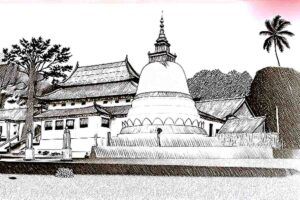
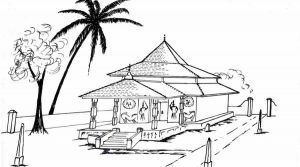
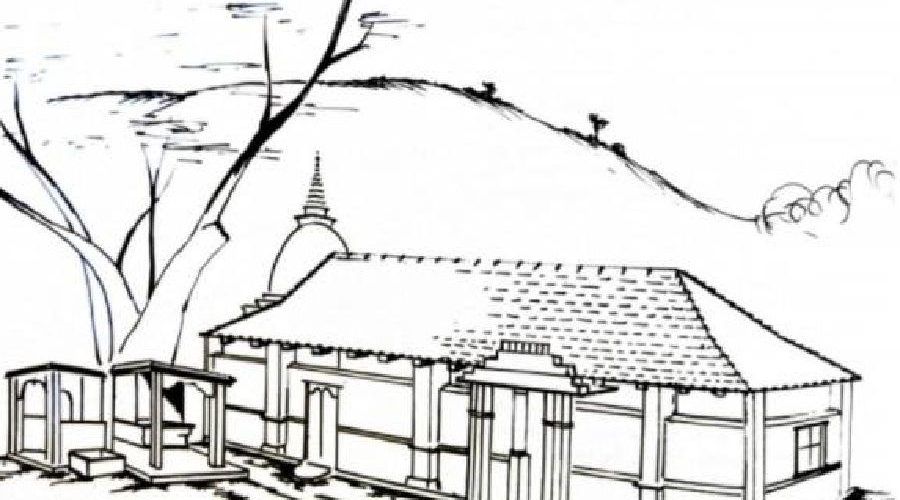
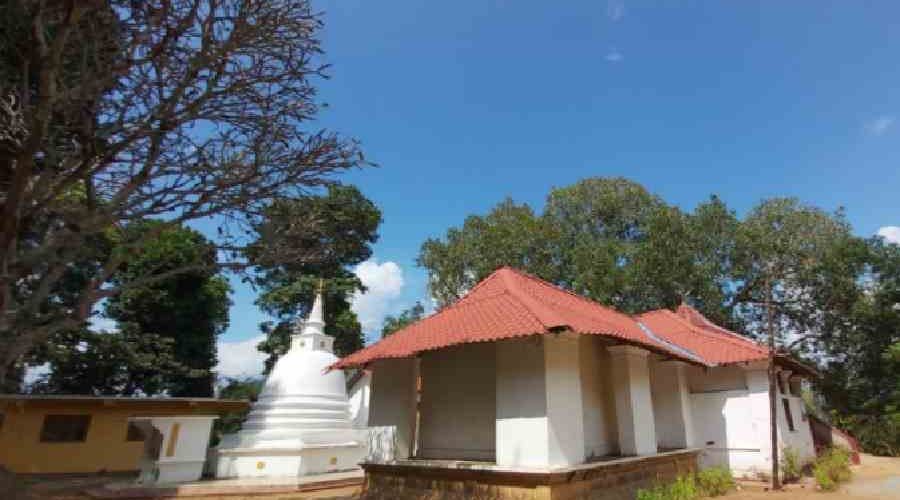
The vihara building which contains two image-houses within, one at each end. They share one roof (this was constructed by a recent Incumbent), which also covers between them a rectangular hall (bana maduwa) .
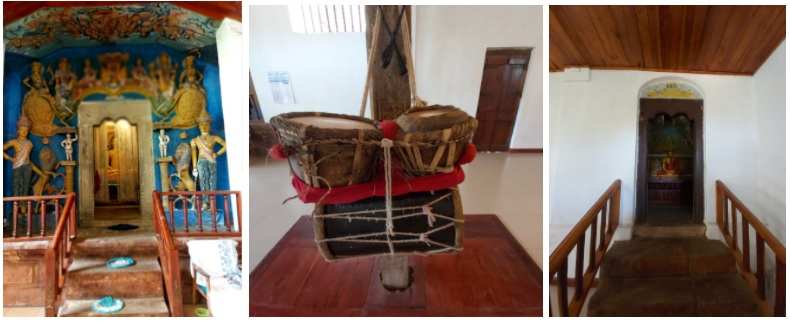
The older image house on the right contains the two ancient Buddha images: one sedant image about 4 feet tall, built of plaster over a sandalwood core, and then painted over; and a second smaller wooden figure of a standing Buddha. The other Buddha images are recent gifts. The walls are painted with the 24 suvisi Buddhas and other representations, while the ceiling shows the usual floral designs.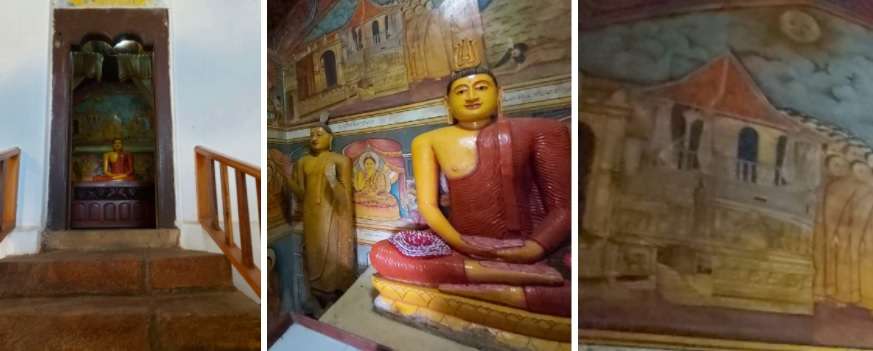
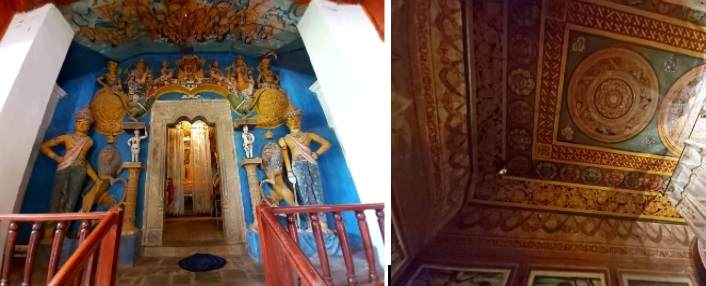
Yet the murals are certainly post 1803 as it depicts the Octogan of the temple of the tooth in Kandy. Hence clear evidence of a later addition.
The more elaborate newer shrine to the left. It is the more recent image-house which has a similar collection of images and murals, all of recent origin, about 60 years old. This image-houses has at its entrance, the usual guardian deities.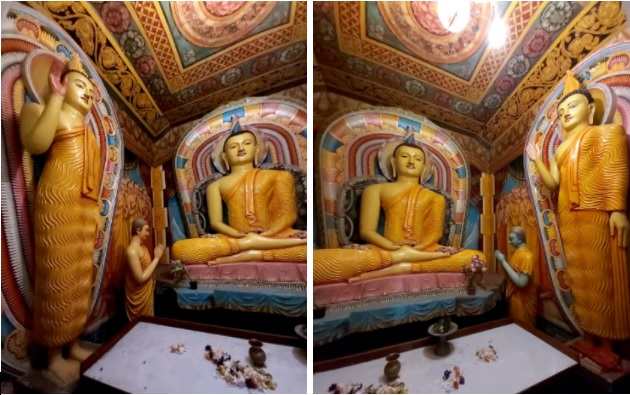
The Kings displeasure
Then, during the time of Rajasingha II (17th century A.D.) this king after a visit to the temple was displeased with the mal-administration he found there, and removed all the lands and rajakariya attached to the temple, handing all these to the adjoining devale, which to date is the more prominent.
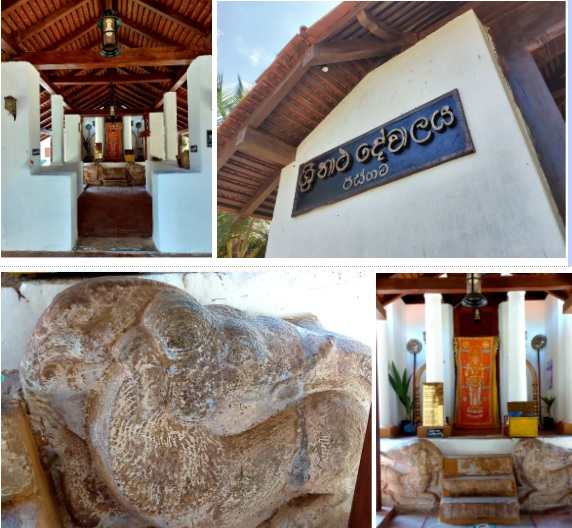
Two Gajasinha stone carvings adorn the entrance to the devale sanctum.
In time the already neglected vihara fell to ruin, when in the 18th century, Kirti Sri Rajasingha restored it and granted fresh lands and endowments for its Maintenance.
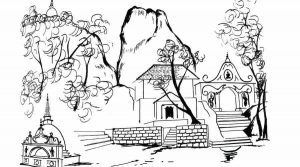
The temple lies amidst rural surroundings in the Pata Hewaheta in the Hewavisse village. The name, Pasgama, refers to the original five villages that supported it. The present buildings lie at two levels.
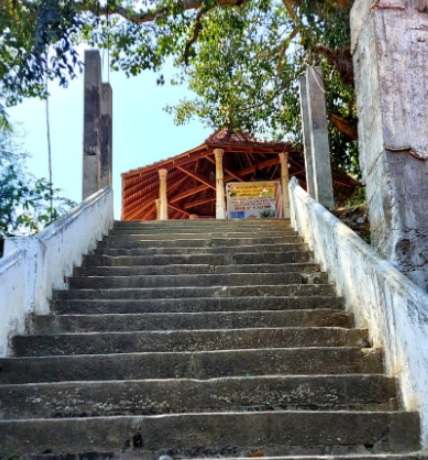
Separated by ancient stone steps.
The Abodes of the monks and stupa
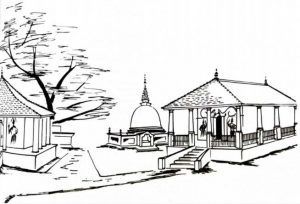
The pansala and the old bodhi tree are at the lower level, with the former surrounded by a profusion of trees. From here, several steps lead up to a second laid-out area on which stands the vihara, and next to it, another bo-tree and mal-asana. Behind the vihara is this ceitiya.
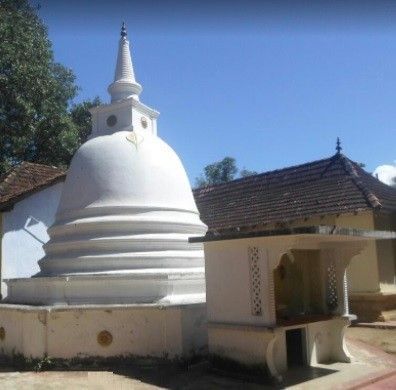
This ceitiya behind is only 100 years old (1920s), having been built at the same time as the second image house. On a rise behind the vihara stands a beautiful library or pattirippuwa, now no longer used as such, but kept for the sole purpose of housing the karendiya containing relics during the perahera held here.
A Village Perehera
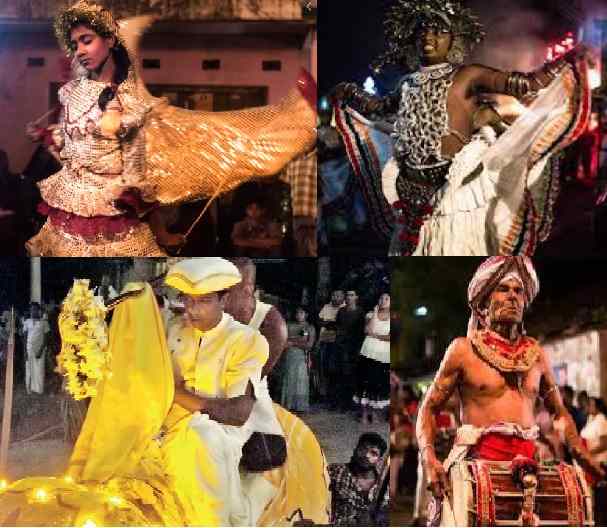
Here also, in early times, used to be held a kiri-boda perahera, as at Sagama. This is now no longer observed. Instead, it has been replaced by a Esala Perahera held for 15 days, commencing ten days after the Kandy Perahera. The Pasgama Perahera consists of five inside Peraheras, 5 Kumbal, 5 Randoli and one Daval (Day) Perahera. For the Diya Kepeema on the last night of the Randoli Perahera, it winds its way to Ma Oya in Hanguranketa, a distance of about two miles. It has to traverse through hills and paddy fields cutting across villages. About four elephants take part in this perahera and even walk on the narrow ‘Niyara’ of the paddy fields ! The ‘Deva Abharana’ (insignia) of the deity is taken by the ‘Kapurala’ of the devalaya wrapped in a white cloth.
Two more historical events connected with this temple are of interest. In 1664 A.D., following on an abortive rebellion in the city Rajasingha II accompanied by fifty followers, had to flee for safety to his maligawa fifteen miles from the city; this maligawa had been erected on top of the hill, the Gala-uda Kande, above this temple. Robert Knox gives a brief but vivid description of the event in his book!