
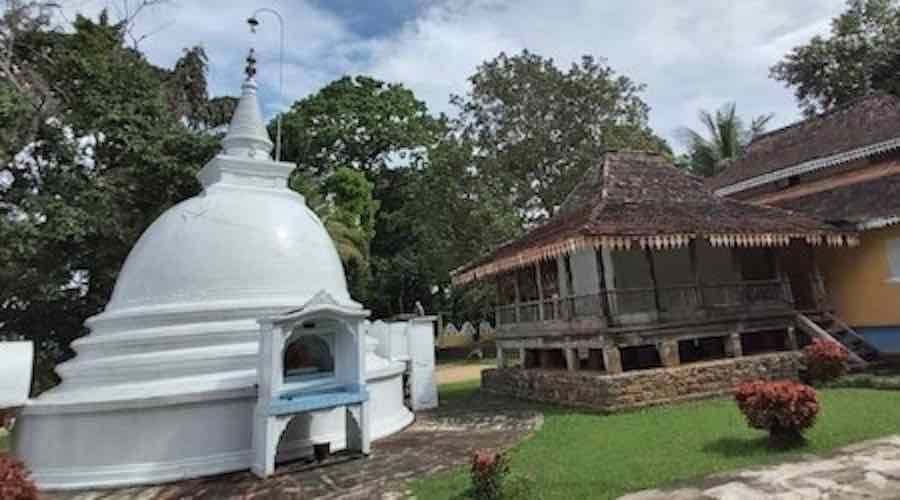
Beginnings from an Anuradhapura era
A temple in Harispattu, about six miles from Kandy. A copper sannasa given in the 18th century (1755 AD) relates the earlier history of the temple. It was originally founded by Valagambha in the 1st century BC when he had finally driven out the Tamil invaders and had regained the throne. Valagambha returned to his erstwhile retreat and to commemorate his victory he built a palace and this vihara. The vihara however was neglected. and so was the palace; both fell to ruin eventually.
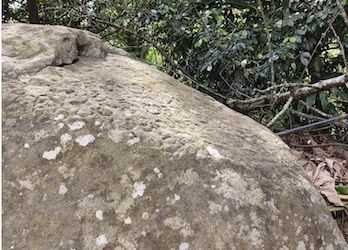
The next milestone was during the reign of Parakramabahu IV of Kurunegala. A local revolt led by Boda Mapananda, resulted in the fleeing of many monks from the city. One of them, Nagala Vanaratana Sami, settled down in Balawita. He heard of the ruined temple and decided to restore it. The king of Dedigama, Parakramabahu V, was approached and gave his approval besides ordering the villagers to abandon their rajakariya and divert this duty to the construction of the temple. This took some years to complete, and the final phase ot restoration was during the next reign (Vikramabahu III of Gampola). An inscription at the foot of the bodhi tree mentions the donation of a village to the temple by this king. The incumbent monk corrected that such is on the boulder and what is at the foot of the bodhigara is an older inscription from a much older time.
The temple that stands on stone stilts
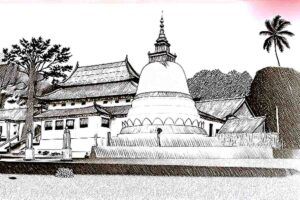
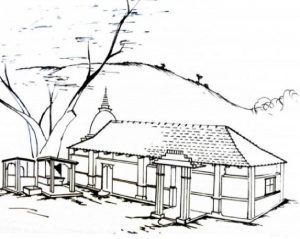
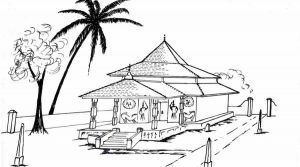
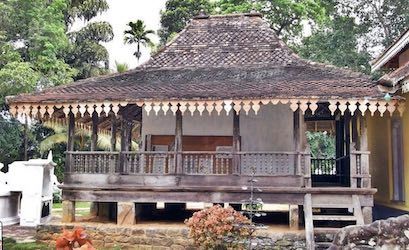
The present temple was put up by Kirti Sri Rajasingha in the mid-18th century. It is a single-room’d wooden structure built on short stone pillars, making it a tempita vihara. It has a hipped roof and Kandyan-style wooden pillars. Surrounding it is a railed ambulatory, another Kandyan-period feature.
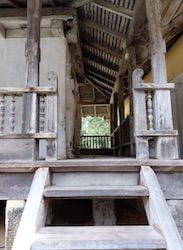
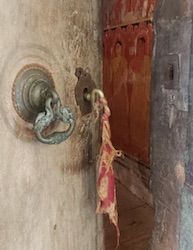
One enters through a beautifully carved door.
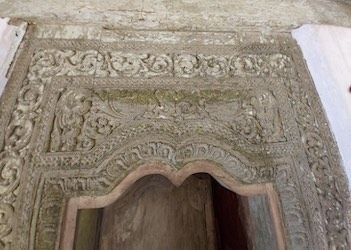
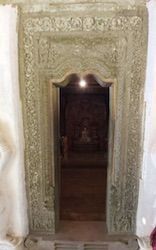
Within is a small sedant Buddha image (of alabaster), a gift from Thailand. About 21/2 feet tall, it sits under a carved wooden makara torana. (The original image lies within the new poya-ge).
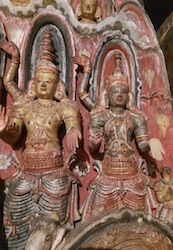
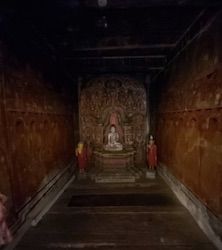
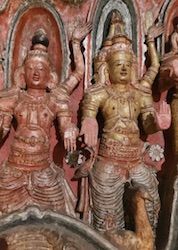
On either side of this torana are the guardian deities, arranged above and on either side: Vishnu, Kataragama, Vibishana and Saman.
The murals on the side walls show a row of standing arahats, with horizontal panels above this row depicting the solosmastana on one wall and the satsatiya on the other.
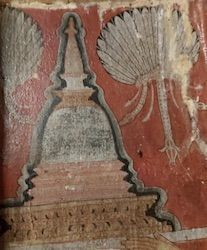
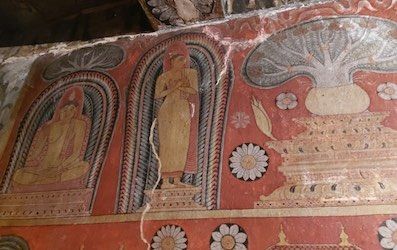
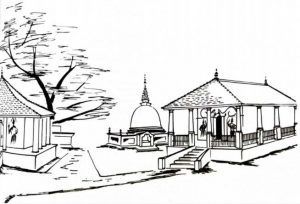
There are also representations of the Jataka stories. Outside, on the left, is a large ceitiya with 4 large bo-leaves moulded in plaster on the upper surface of the dome.
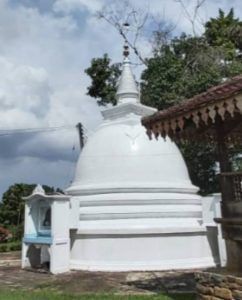
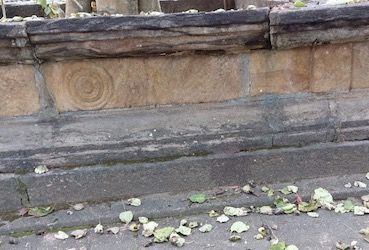
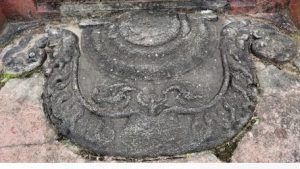
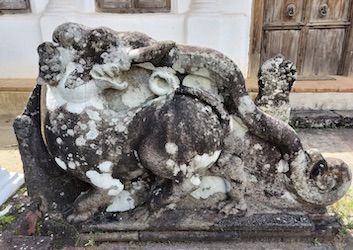
To the right of the vihara is a new building, the poya-gé containing the original Buddha image, while facing the vihara is another old building (18th century) still awaiting renovation. However on our visit 40 years later in 2020 it was also completed and the original Buddha image is housed there. Also a white makara thorana has now been errected incorporating on its side much olde stone works that may have been found on the sides of an ancient stone stairway.
The bodhi tree lies further back.
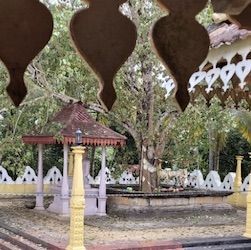
The whole complex lies on a slight rise and is reached by 2 or 3 flights of steps from the road below.
Reference:
A.C. Lawrie, A Gazetteer of the Central Province of Ceylon, 1896. Sannasa of 1755 A.D.These Tamil invaders were Pandyans and should not be confused with the Cholas who (apart from Elara, the Chola prince who ruled from Anuradhapura for 44 years in the 2nd century B.C.) were generally destructive whenever they invaded Ceylon. This was especially so during the .11th/12th centuries when they ruthlessly destroyed and plundered religious buildings and temples.
Mudiyanse, The Art and Architecture of the Gampola Period p. 31.4 Parakramabahu IV (1302 1326 A.D.) was the last king of the Dambadeni dynasty. He was the son of Bhuvaneka Bahu I. Both these kings ruled successively from Kurunegala.