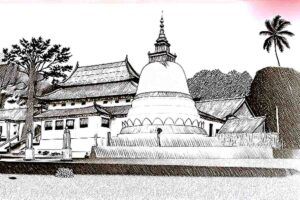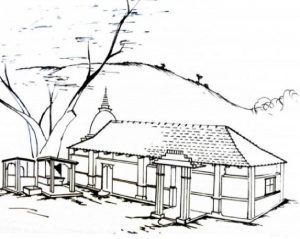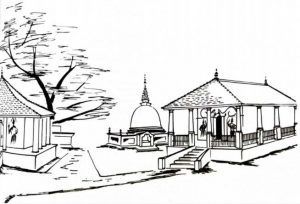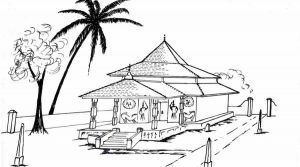
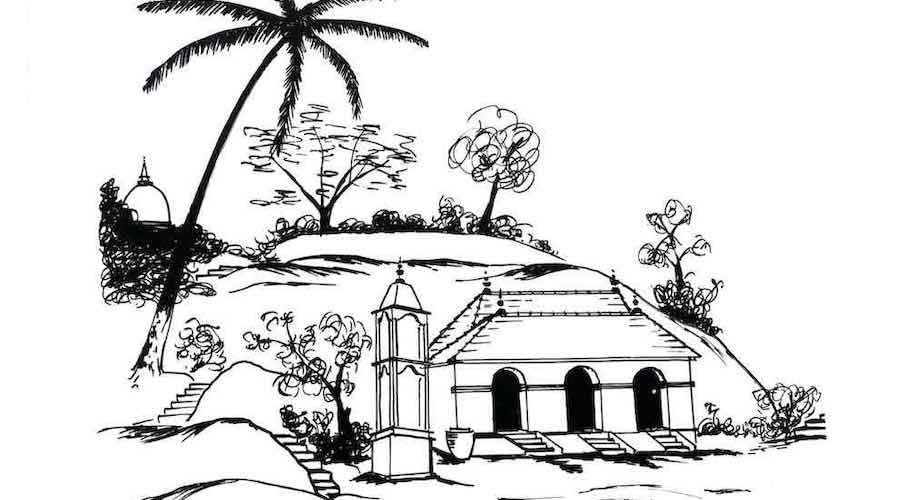

Dambulla style rock temple in Kandy
A cave temple in the Pata Dumbara about 3 miles from Kandy across the suspension bridge at Lewella. The vihara was built in 1771 AD (Sakayear 1693) by Rajadhi Rajasingha astana, during the reign of his elder brother King Kirti Sri Rajasingha, though the land grants were made duringhis own, Rajadhi’s, reign, in Saka 1708 (1786 AD).
Vihara- Gé
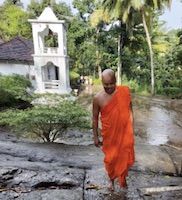
It lies at the foot of an enormous rock outcrop, and consists of a pansala (built by Kirti Sri), and an old poya-gé, with the vihara-gé separated from these two structures by an walakulu bemme(Kandy style parapet wall).
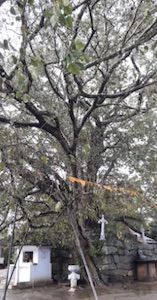
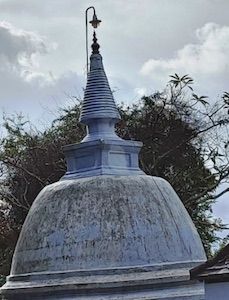
Dagoba and Old Bo-tree
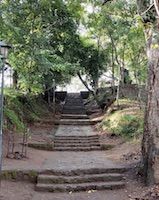
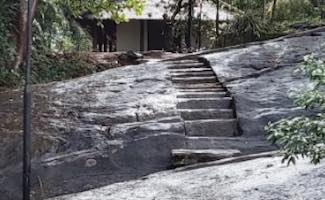
Steps cut into one side of therock lead up to a flat area on which is the dagoba (recent) and the old bo-tree. This area is surrounded by araliya and other trees growing in wild abandon, and has a lovely view of the surrounding hills.
A devale originally sited here and belonging to the temple is no more. It has been re-sited af the foot of the rock about 200 yards away. This is the Pitiya devale.
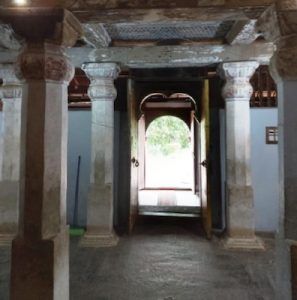
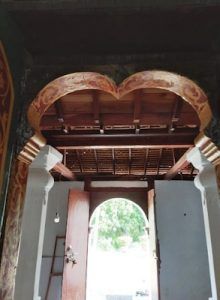
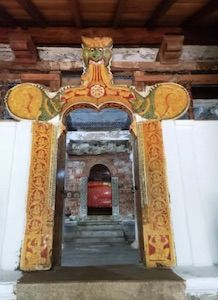
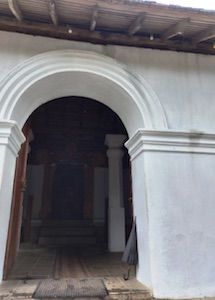
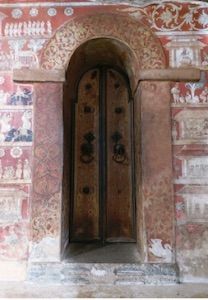
The vihara presents to outward appearances, three arched entrances all leading into a wide drummers’ hall.
Through this one enters, across a full-circle moonstone, the inner hall or mandapaya, which is equally bare, but with the facing wall covered with paintings from the Vessantara Jataka executed by the famous Sittara painter, Devaragampola Silvattenne. These outer and inner walls really form part of a single fore-structure under two roofs.
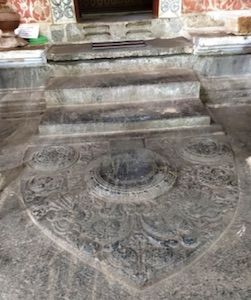
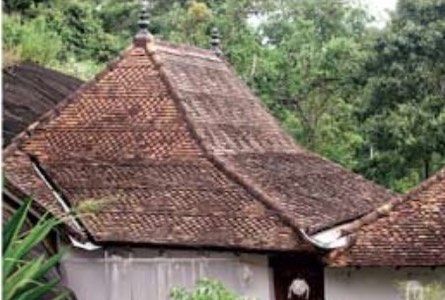
The cave itself is further in, through a makara torana and across another beautifully carved moonstone step.
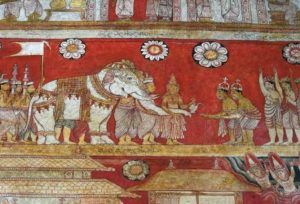
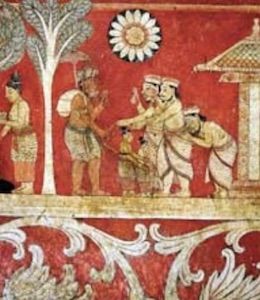
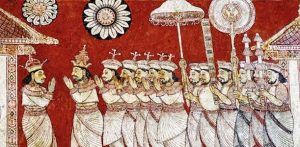
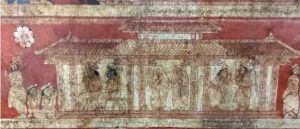
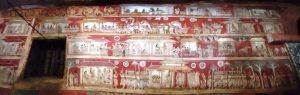
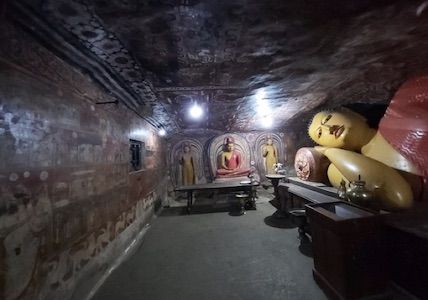
This too is full-circle. Within the inner sanctum, which is the actual shrine room, is a colossal reclining Buddha image in stone, 18 cubits in length.!.
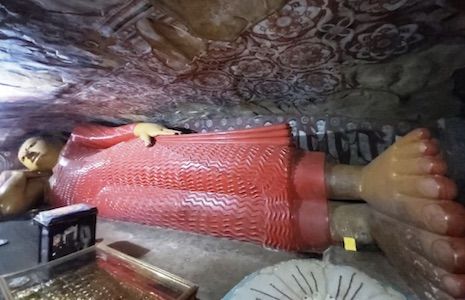
The wave patterned robe is a distinct character of Kandyan era sculpture. The exquisite paintings tells a visual story of the socio cultural fabric of Kandy at the time. The dress, the jewellery, the tools, furniture, architecture and transport means. The quality of artwork supercedes most temple paintings of the Kandyan era.
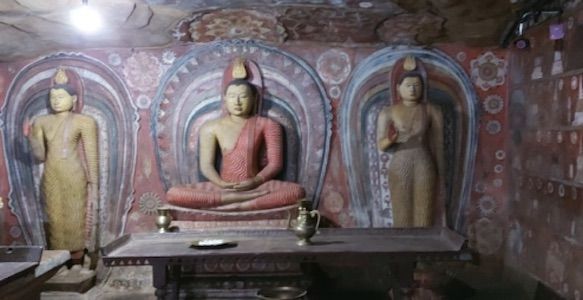
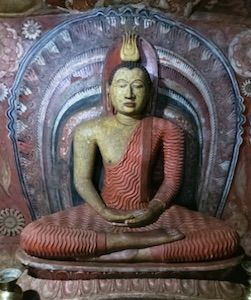
Six standing images, three at each end of the cave, lie in the almost dark interior.
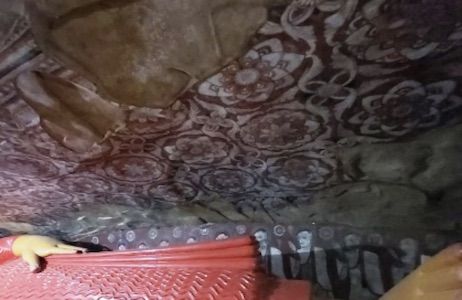
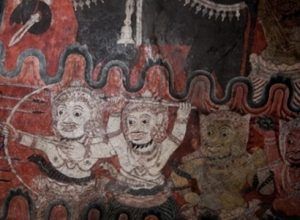
The walls and ceiling are covered with murals and floral designs, the most remarkable being the one depicting the Encounter with Mara, the Evil one, almost directly over the entrance.
All six images as well as the reclining Buddha, are the original images mentioned in the copper sannasa of 1786 AD.