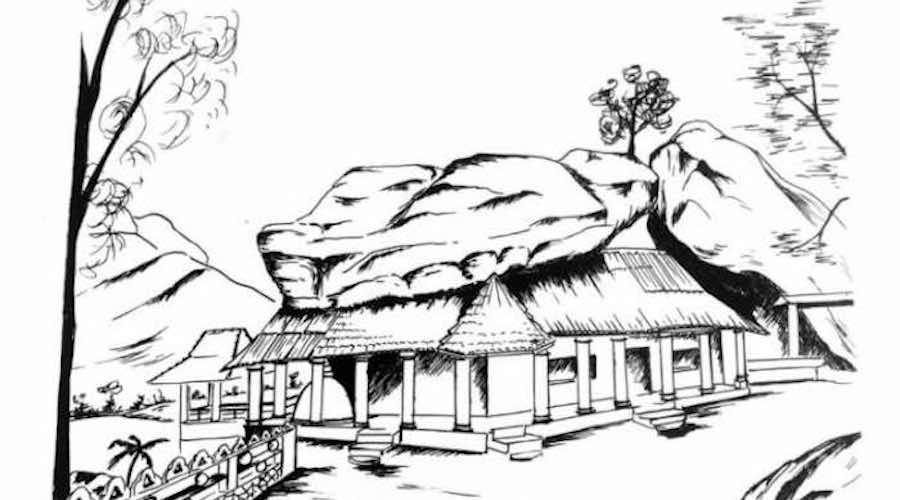
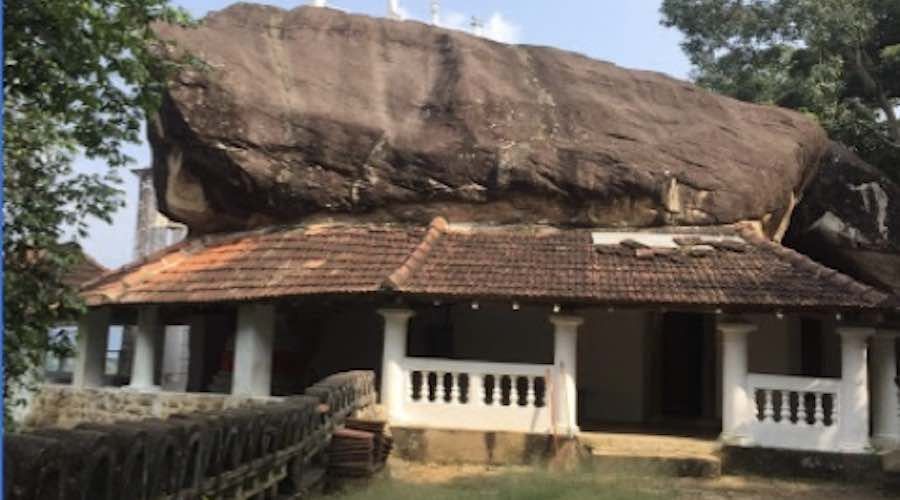
Cave temple with spectacular views
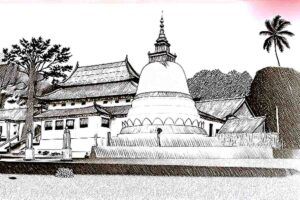
A cave temple in Teldeniya in the village of Wewegama. According to the viharadipathi the present temple was built in Kirti Sri’s time (18th century) but as he points out, the cave was undoubtedly occupied by Brahmini ascetics prior to that date as is evidenced by the rock inscription below the drip ledge of the second cave behind the main boulder. The inscription reads “ඉදශල ගුහ ශගශ ” meaning : “The Cave Indrasala – given for the monks”. Indrasala means a hall for the community to enjoy.
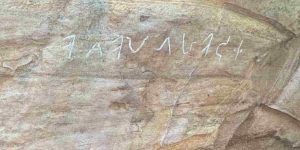
Another inscription which is in Brahmi script refers to the gifting of this cave by “Datta, the wife of the Pocani king” (pocani ancient, belonging to an earlier generation, acc. to Paranavitarna’). The Brahmi script would date the temple as pre-Buddhistic, ie., more than two thousand years old.
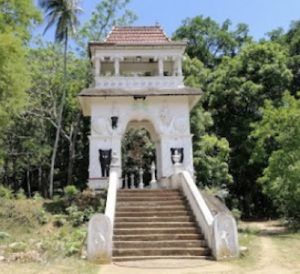
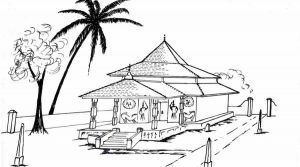
The recently-built arched entrance or torana stands at the foot of a rise that leads by a flight of 164 stone steps to the rock temple, the pansala being sited about half-way up.
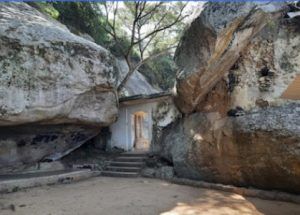
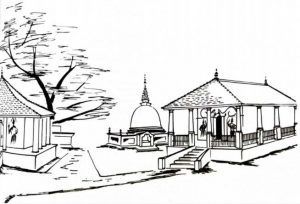
At the top of the last flight of steps one passes through a natural archway formed by two huge boulders, the smaller one leaning heavily against the larger and forming a peaked entrance-tunnel which finally opens on to the wide courtyard of the temple.
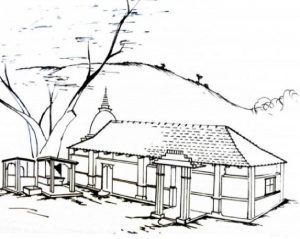
The larger of the two boulders contains the elongated cave that forms the shrine room. The cave has a built-up front wall and an open verandah protected by a lean-to roof.
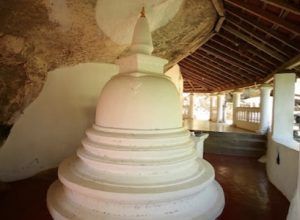
The verandah runs along the full-length of the cave before winding round the far end of the boulder where it ends in some steps that lead to a second cave at a lower level. It is here that the Brahmi inscription is found. This second cave, used today by some of the younger monks as extra living quarters, was earlier occupied by the Brahmini ascetics referred to Within the main cave is a large recumbent Buddha image, and a smaller sedant image alongside.
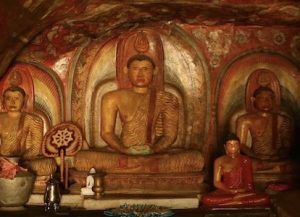
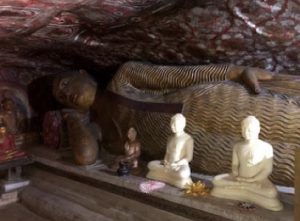
The walls of the cave are covered with paintings of the suvisi Buddhas, sat satiya, and Jataka stories. The ceiling has the usual floral (lotus) designs. Outside, along the verandah is the ceitiya. At the bend of the verandah outside is a roofed projection facing north and overlooking the rising waters of the Mahaweli ganga and the opposite bank.
The rising waters, following the closing of the Victoria dam further downstream, now just cover the old road-bridge and former approach road to the temple from the northern end.
Apart from listing the name of the village, Wewagama, there is no reference to either cave or temple by Lawrie in his Gazetteer.
Paranavitarna, Inscriptions of Ceylon 1970. Vol. I p. 63.