The Village of the Royal widows
Attharagama, as it is often called, was once a royal village providing for the dowager (widowed) queens of the kingdom. The last known widow was the Queen of Kirti Sri Rajasinghe who was called Udamale Devi, during the reign of King Rajadirajasinghe. However, according to myth, long before that, a vihara had been built here by Valagambha during the first century B.C.
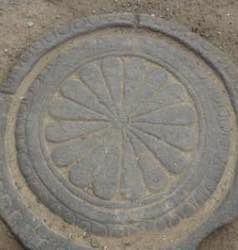
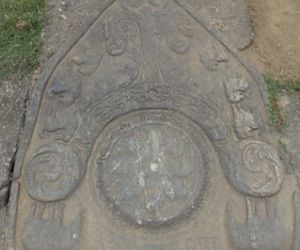
The vihara had been abandoned and in ruins during Dutch times, but was renovated by Kirti Sri Rajasingha in the mid-18th century. Tradition holds that one of the Sangha aramparawa, Aratagama Bandara, was in fact a teacher of Velivitta Saranankara, the sangharaja, who was responsible with Kirti Sri for the Buddhist revival in this country. He was certainly a leamed guru, and author’d many books, among them Vade-kavi-potha (= the Sinhala alphabet in poetry form), and Gamadevi-Hale, during a time when learning was at a very low ebb.
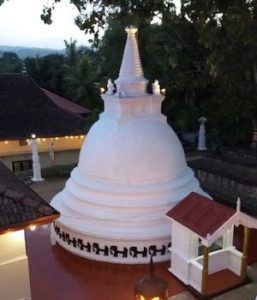
The temple lies in Harispattuwa, a few miles north of Kandy along the Madawela road. It is sometimes called the Aratagama Potgul vihara after the second more recently built vihara on the same premises. (140 years old)
The two Vihares
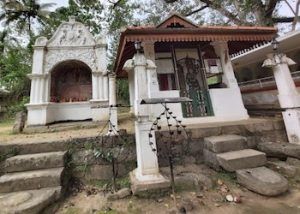
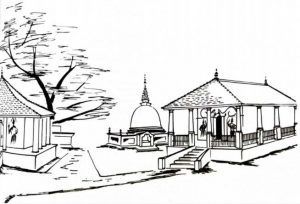
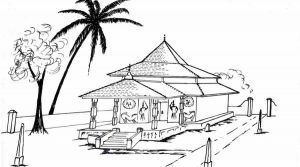
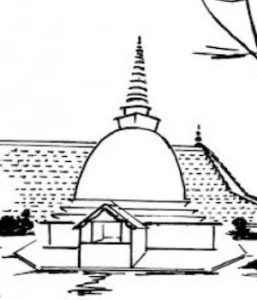
The older vihara is a simple structure with a makara torana entrance to its inner sanctum.
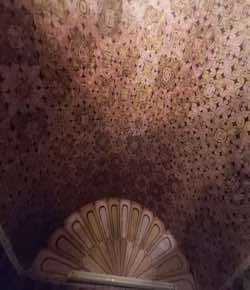
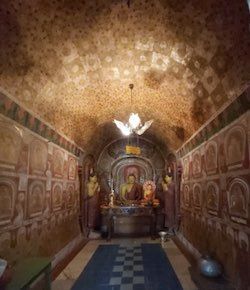
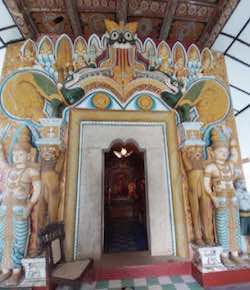
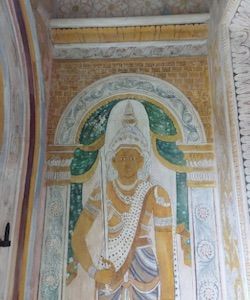
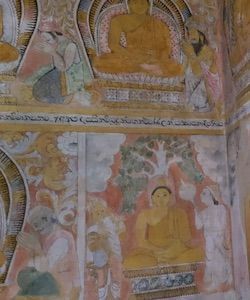
Here a sedant Buddha image flanked by two standing images may be seen with the usual suvisi (24) Buddha paintings on its interior walls.
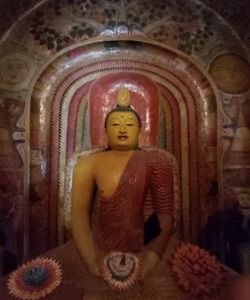
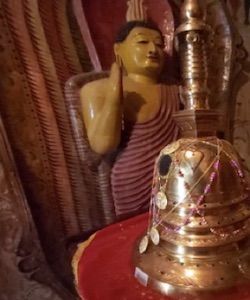
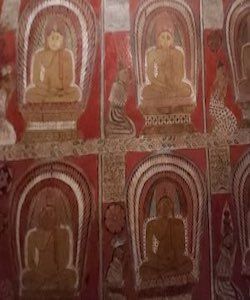
This old pilimagé is today protected by a recently-built hall in front (and an ambulatory on the other three sides). The pilimagé is unusual in having an arched ceiling, but this has the usual floral designs. The images belong to the Kandyan period.
The Library of Buddhist Philosophy
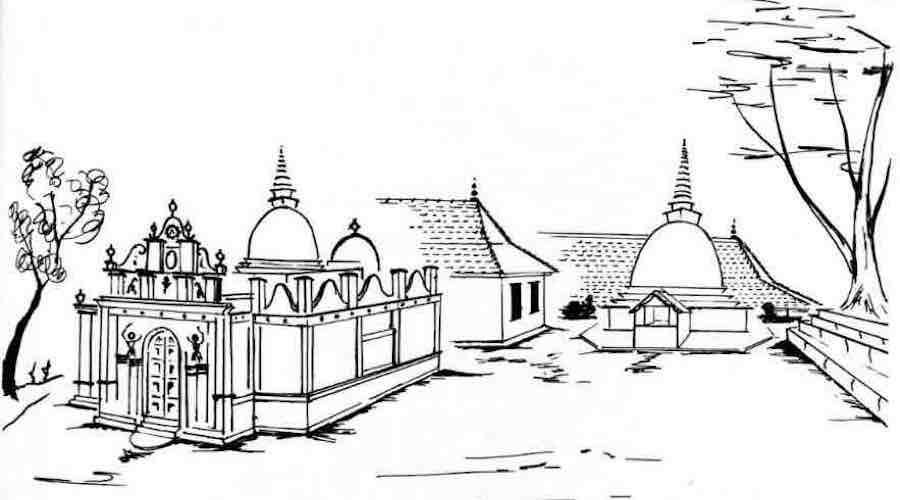
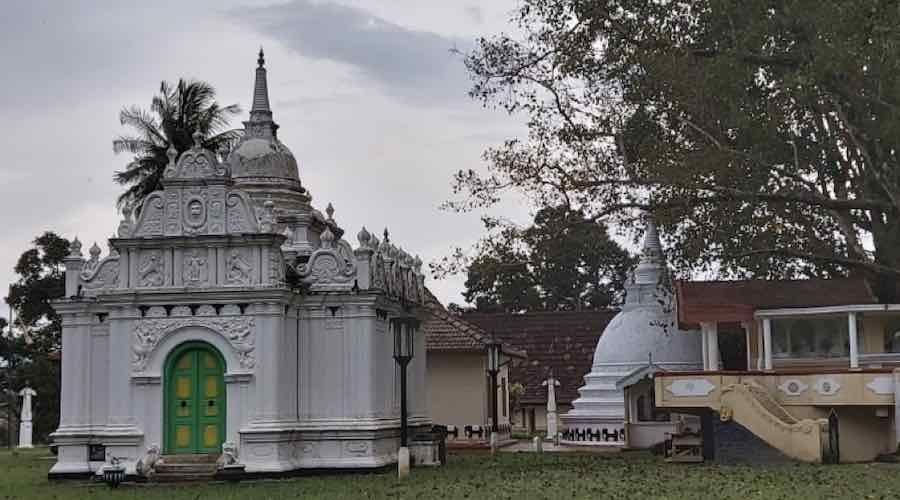
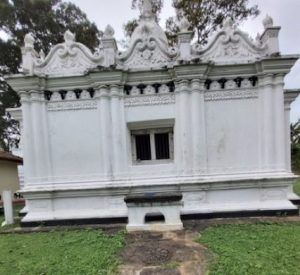
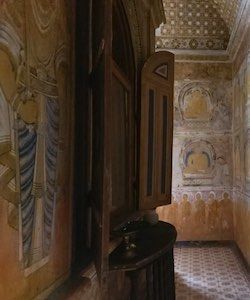
Standing alongside, a short distance away, is the 140-year old potgul. Verv much more elaborately built, it used to contain all the valuable manuscripts and books belonging to the temple. Hence the name “Potgul” an ancient name for Library.
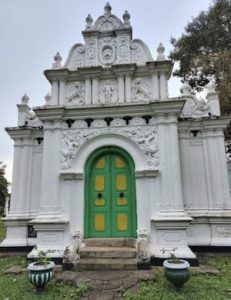
Today, though, its four cupboards contain mainly small Buddha images that have been gifted by other countries. The cudbouds frames have been painted with portraits of past Kings, but rather crudely.
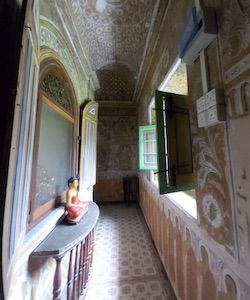
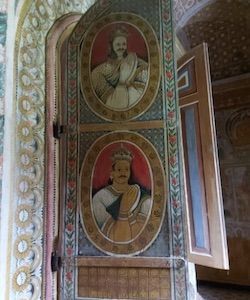
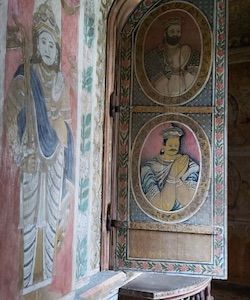
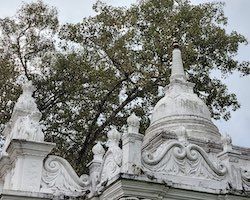
What is eye catching is the soft yellow hues of all the paintings that adorn the rest of the walls including the ceilings. The floor has mosaic tiles from the 1880s when the newer Potgul Vihare was built. Perched on the roof of the Potqul vihara is a small ceitiya.
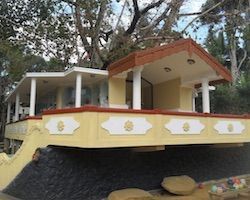
The pansala lies outside the vihara premises, as does the recently-built bana maduwa. There are two Bodhi trees. The old bodhi-tree with a classic stone Bodhi garaya with insets for pahan lighting stands hidden. Beside it stands a much younger bo-tree with a practical but ugly ambulatory to perform bodhi poojas in shelter!!
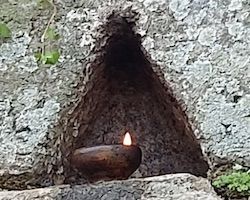
The old devale, a small one, is farther out and at a higher level.
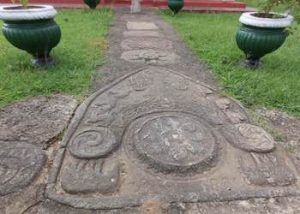
Many mazing stone workmanship that may have adorned the floors lay haphazardly placed on pathways.