The Beginings
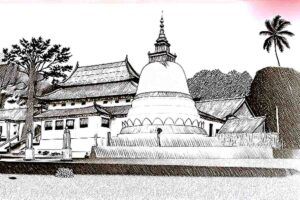
An ancient and beautiful temple. just outside the town of Gampola whose exact date of origin is uncertain.
A stone inscription (see Footnote 1) of 1373 A.D. refers to its renovation during that year by Vikramabahu ll of Gampola. It also mentions the re installation of a sangha paramparawa that had been attached to the temple for 485 years in unbroken line of succession. ie.. from 888 A.D. This would date the temple as well: but the inscription goes on to say that the original temple was built by King Mota Tissa, .a royal name not mentioned in the Rajavaliya or other chronicles. Nandasena Mudiyanse conjectures it could possibly have been referring to Malu Tissa (165 – 193 A.D.)
A second authority, quoted in full by Lawries, is a royal sannasa of 2341 B.E. (= 1798 A.D.) granted by King Sri Wickrama Rajasingha of Kandy which it is mentioned that the original temple had been built by Bhuvaneka Bahu IV and subsequently renovated by Kirti Sri Rajasingha, and of course by Sri Wikrama Rajasingha himself.
The present incumbent supports the Vikrama Bahu lIl story but only adds to the confusion by stating that its history goes back to the time of Devanampiya Tissa. He maintains that the Mota Tissa referred to was Mutu Siva’s son, Devanam Piyatissa.
The Complex
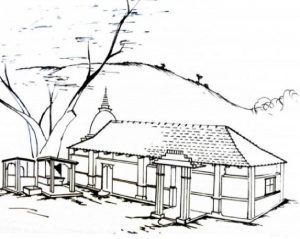
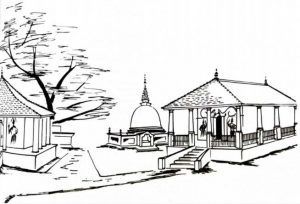
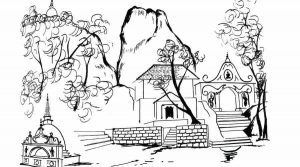
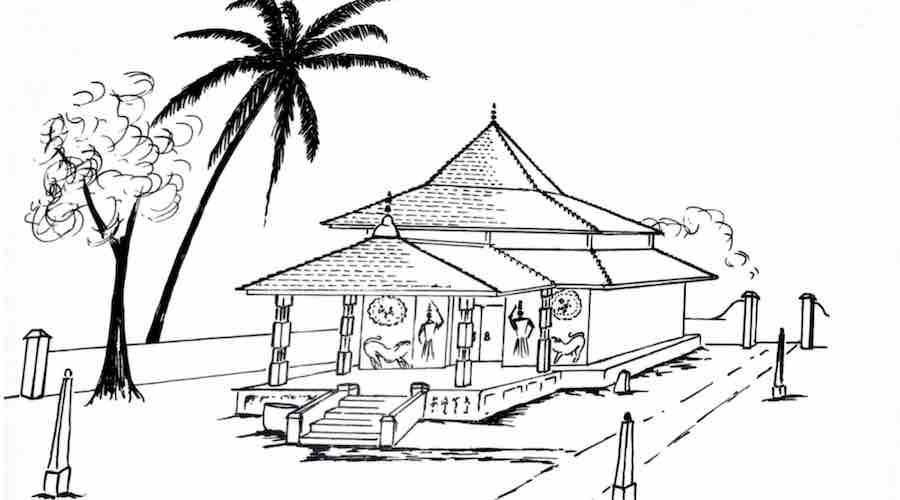
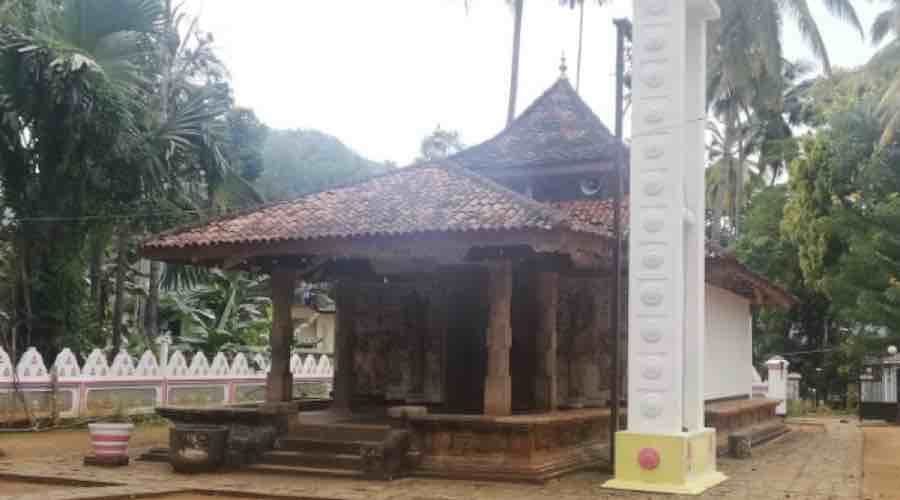
The present complex covers an extensive area of nearly one acre, lying on of the complex lie on either side of a broad path leading up the complex covers an extensive area of nearly one acre, on either side of a broad path leading up
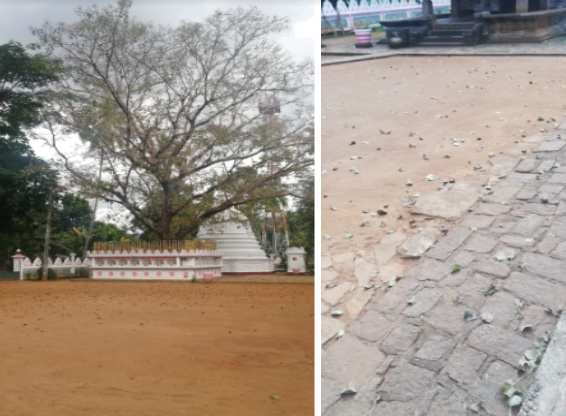
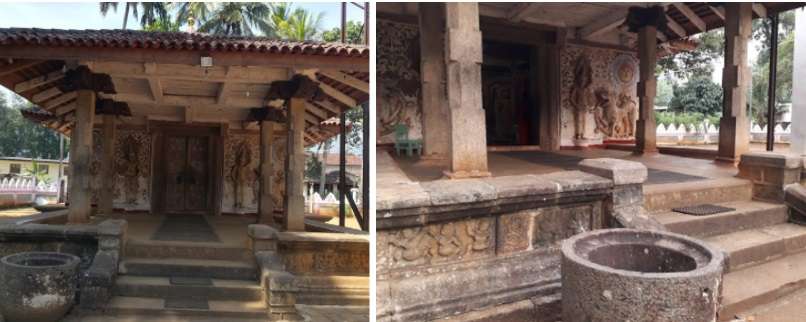
A roughly paved footpath leads past this to the ceitya and bodhi tree at the far end of the courtyard. The entrance hall extending forwards from the vihara is of stone, with stone pillars supporting the roof, and has a series of carvings of dancing girls and musicians running round its base on three sides, reminiscent of similar carvings at Gadaladeniya.
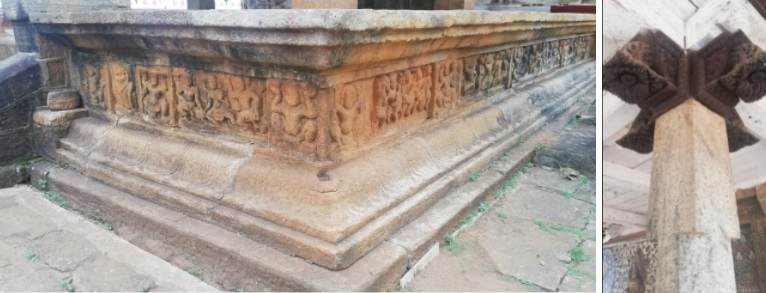
This frieze in front is interrupted by the few steps leading to the entrance. The steps are supported by a balustrade on either Side. Carved stone pillars support the roof of the entrance hall, on to which opens the inner sanctum or budu-gé. The doorway is of stone and the wooden door is considered the oldest door with pivoting wooden hinges found in Sri Lanka. The carvings on the front wall which include the sun and moon motif, ra-handa, above, and the Sinhala lion below at the far end of the wall on either side.
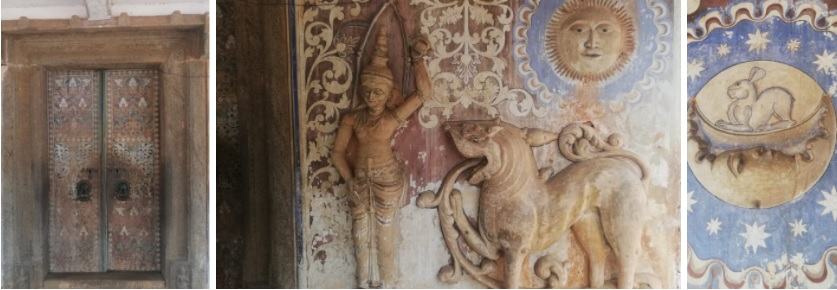
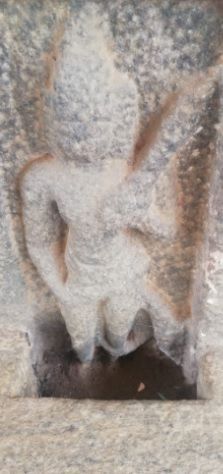
On either side of the doorway are two guardstones of a miniature size, that lay somewhat below the newer level. Probably from an earlier period.
Within the budu-gé are three sedant Buddha images arranged against the three walls of the room while on either side of each of these images are standing images.
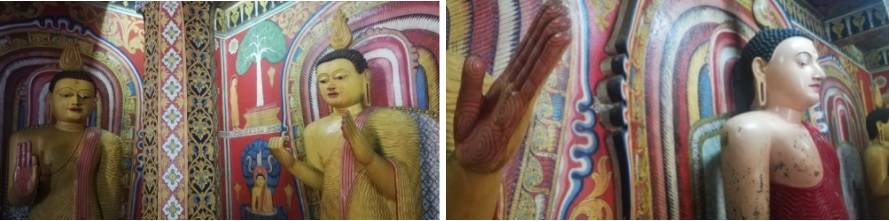
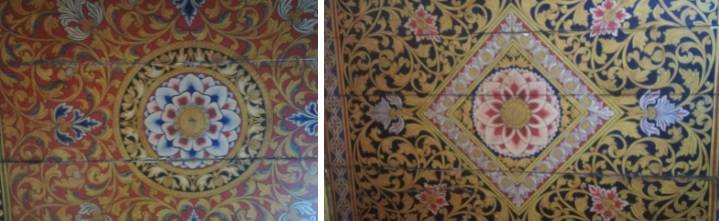
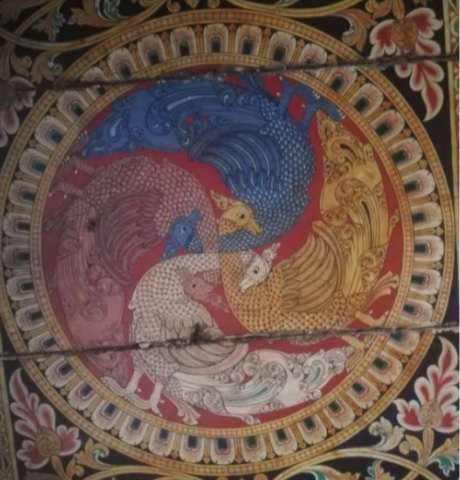
The use and floral designs and murals on the ceiling are very much in line with the Kandyan style.
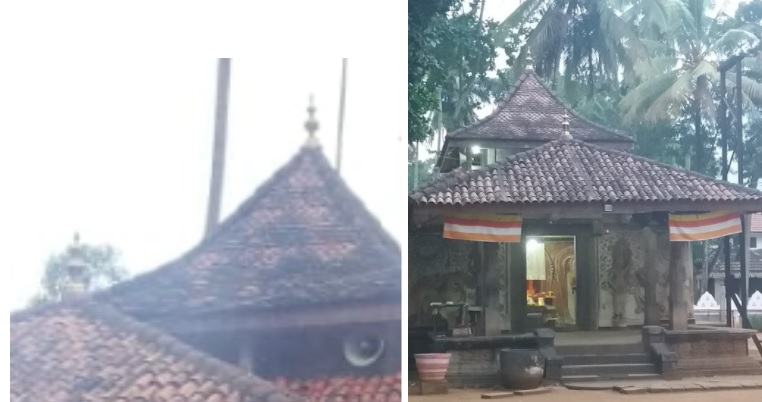
So is the hipped-roof and the non-functional upper storey.
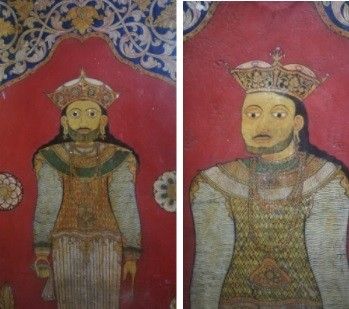
Inside the doorway is a large mural of Sri Wikrama Rajasinghe, the last king of Kandy, and the last renovator of the temple in 1804 A.D. In picture below is the portrait of the Last King found along with Unamboowe Dissawa his 2nd Adigar.
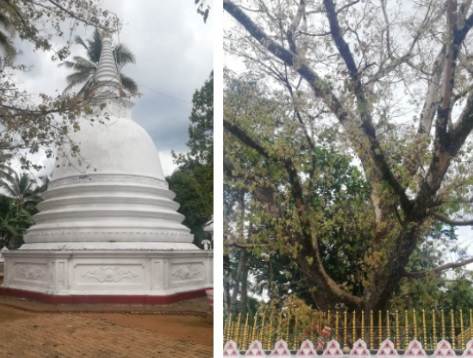
The ceitiya amd bodhi tree are 120 years old.
An interesting historical fact is that, after it had been removed from Kurunegala, the Tooth Relic was housed here for two years. It has also been recorded by a Burmese priest of that time that there used to be a perahera held from Kurunegala to this temple.
1 N. Mudiyanse. The Art & Architecture of the Gampola Period. p.125 et seq..
2 A.C. Lawrie. A Gazetteer of the Central Province of Ceylon, 1896.