Beginnings from the Kotte Kingdom days
The history of this vihara is closely linked with the history of its own nati-sishya paramparawa. The story begins, in fact, during the reign of King Vikrama Bahu (Sena Sammata) of Kandy in the 15th century when a priest from Jayawardena Kotte accompanied by several fellow-priests came to live in the hill-country, at Urulewatte. The next king, Jayaweera Astana (1511 – 1551 A.D.), who followed his father to the throne of Kandy, was during his reign desirous of accumulating merit and accordingly had the Urulewatte priest transcribe the Vissudhi-marga, as a reward for this work, Jayaweera Astana granted the priest the badawedilla (land granted by a King) of Pulkumbara, and a two-storey’d building on it for a pansala.
The priest’s name was Bhuvaneka Bahu Thero (as he was in fact a brother of the reigning monarch of Kotte of the same name), and when he took over the incumbency of the Palkumbara pansala he started a sangha paramparawa that was to continue in unbroken line until the time the last King of Kandy.
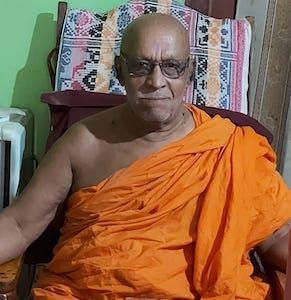
The current incumbent from the same line.
It was this king, Sri Wikrama Rajasinghe, who gave a second, copper sannasa to replace the original 16th century one that had been charred in a fire, possibly during a Portuguese attack on Kandy. And it is this last sannasa quoted in full by Lawrie’ that unfolds the whole history of the paramparawa and of the temple.
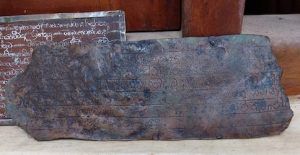
The older charred deed of the early 1500s

The newer one given in 1815
Hidden within an old warehouse, another World within a time capsule
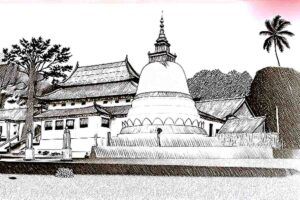
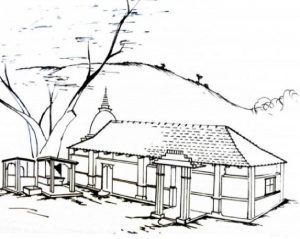
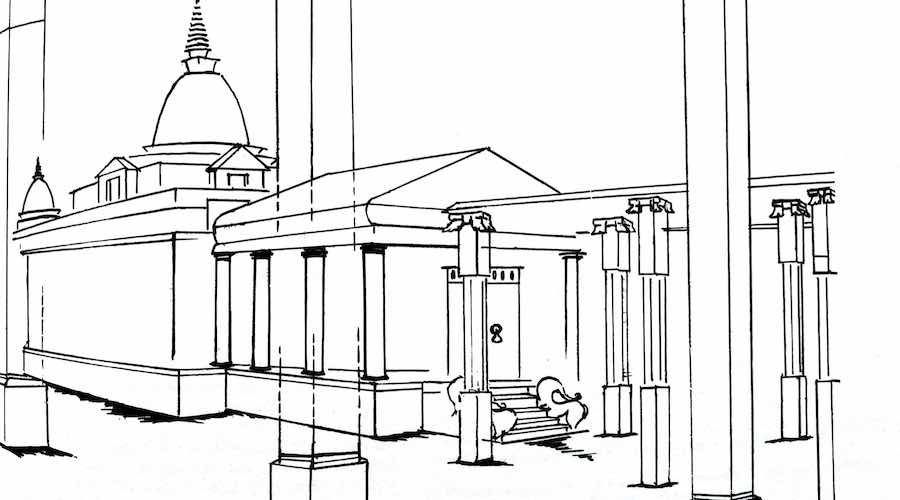
The old vihara is built of stone, except for the smaller images within. The architecture is Indian and reminiscent of Gadaladeniya on a smaller scale. As it stands today in the Harispattu, this ancient temple is completely enclosed within four windowless walls nearly 20 feet high, and a high tiled roof. The enclosure has but one entrance, along one of its narrower sides.
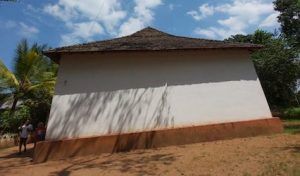
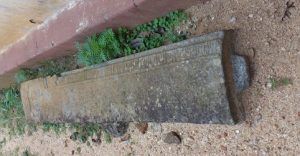
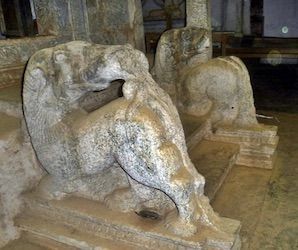
Two enormous stone toranas lie on their sides in the foreground beside the front entrance.
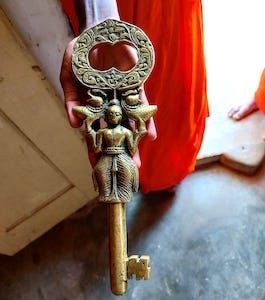
The door to this has a huge brass key decorated with a female-dancer design on its shaft.
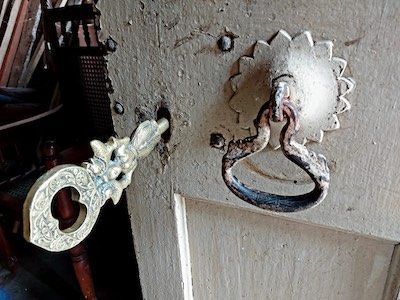
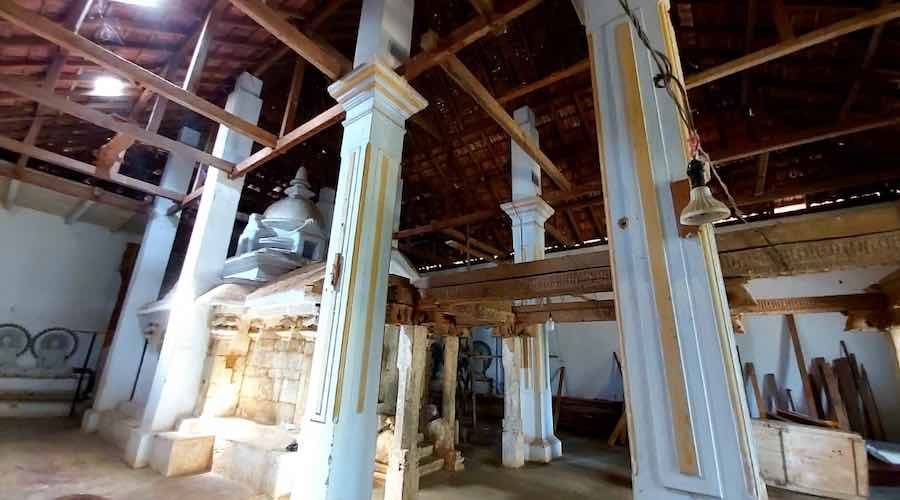
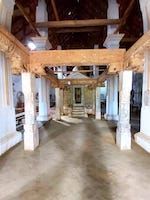
Within is another world. Massive imposing pillars of brick reaching up to the skies, as it were, hold up the high roof, while a colonnaded corridor, or dig-leads up to the front steps of the vihara. The dig-gé itself is supported on either side by a colonnade of pillars in Kandyan style, holding up its own roof. At the far end of the corridor a few steps with a gaja-singha balustrade on either side, lead up to the vihara entrance.
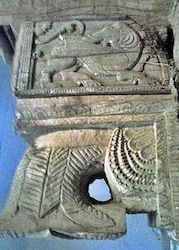
At this point, a carved stone Surrounded with lotus flowers. The ceiling supports on its upper surface a small stone ceitiya, simple and impressive, with vahalkadas at the four cardinal points.
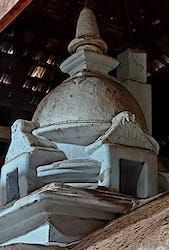
Way up above all this is the roof of the enclosure. doonway opens on to a narrow vestibule, and from here through a second stone doorway into the shrine room.
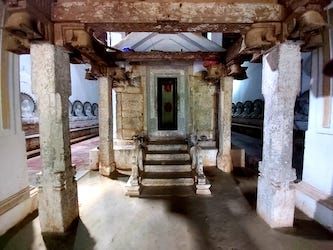
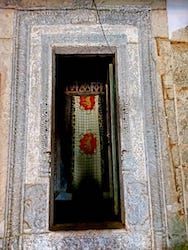
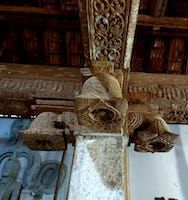
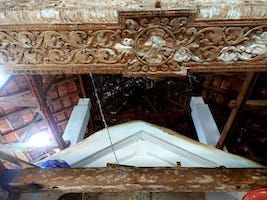
This temple is of extreme value archaelogically as it depicts what the wooden construction over stone pillars may have looked like, as most in the Island are devoid of a structure above the stone pillars. The outer building built in the times of Kandyan kings probably long years after its burning by the Portugese has preserved valuable features and carvings.
Within this inner sanctum, and facing the entrance, is a life-size sedant Buddha image modelled out of stone but with mate plastered over the rough surface to facilitate moulding of the features etc. This is one of the original images. Two smaller standing images, one on either side of the main Buddha image, are not quite as old, and their date is uncertain.
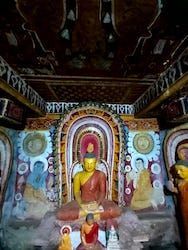
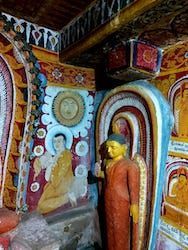
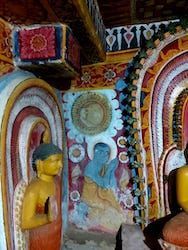
The sedant image is surrounded by multi-coloured emanations moulded onto the wall behind; the murals on either side of the main image depict his no chief disciples, Sariputra and Mugalan (= Moggalan).
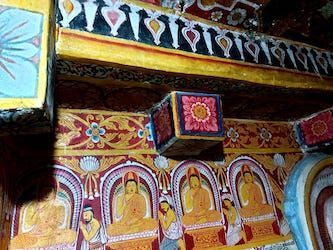
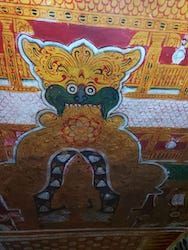
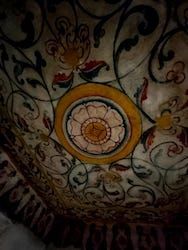
The ceiling of the image-house is constructed of stone slabs, as is the mal-asana in front of the main Buddha image. On the walls within are depicted more Buddha images, while on the ceiling itself is painted a kibihi.