Glossary of Buddhist temple terminology

Abbithaya ඇබ්ත්‍තයා

a boy usually over ten years of age, who has been chosen by his parents to join the priesthood; he serves as a novitiate for three years under a senior priest at the temple before he can be ordained as a samanera (qv).
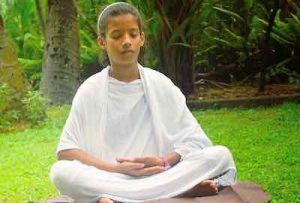
abbithaya

door bolt; also dandu agula (dandu = wood or timber)

elevated seat for a priest. In the present context, and as used in this book, a throne for the Buddha Image.

parapet wall. Walakulu bemme symbolising a cloud effect; and diyareli bemme symbolising a wave effect.

one who temporarily renounces attaining Nibbana so that he may help others to attain that state of Enlightenment.

incidents in the life of the Buddha, viz.,birth, leaving home, His first awareness of disease, old age and death, etc.

Buddhist era, B.E.

Begins 543 B.C., with the death of the Buddha (though some scholars prefer the date 483 B.C.).

the six-coloured aura emanating from the body of the Buddha when he finally attained Enlightenment. Often represented as a halo of coloured rays.

 stupa, dagaba. Also spelt dagaba.  pinnacle.

Cubit

one and a half feet.

stupa, dagaba. Also spelt cetiya.

abode of the gods. A squat cylindrical structure lying directly on the hataras kotuwa(qv); usually with mouldings of devas on its surface. Above it is the conical spire.

temple of Hindu gods or deities, attached to or within the precincts of a Buddhist temple. The Buddha Image is prayed to for spiritual solace, while the deity within the devale is approached for material returns. Is in charge of a laycustodian or kapurala, who will solicit the god or gods on one’s behalf

hall used for preaching.

hand positions indicating meditation.

mythical elephant-lion figure, usually decorating balustrades or other entrances to religious buildings. Appears in the religious architecture of the 14th century and gradually displaces the makara balustrade that is characteristic of the Classical period. Is also found moulded in friezes and in paintings.


unordained secularised monks who, whenever it suited them, would put aside their robes and carry out services normally forbidden them by the Sangha, eg., ploughing the fields. Some even had families.

a brick or stone building with vaulted roof.

hereditary or familial succession in an Incumbency.

in the early days of Buddhism the priest who chose to go amongst the people to preach and advise rather than stay in seclusion and lead an ascetic life. (Skt. grama; Pali, gama).

two swans with necks intertwined.

the four-sided (hatara) box sitting atop the dome of the stupa. Usually has the ira-handa motif moulded on each face.

drummers’ hall. Also called hewisi mandapa.

sun and moon motif in painting, sculpture etc.

stories of the Buddha’s previous births.

meditation by concentrating on a single colour (red, blue or yellow) or a coloured disc. Based on the phenomenon of the after-image.

lion’s head/face at keystone of the torana. Usually with goggling eyes and protruding tongue.


cells or rooms used as residences for bhikkhus; a single-unit residence for a bhikkhu.

military service as rajakariya.

the Buddha that is yet to come 2500 years from now.

a composite animal, with head of a crocodile, a snout like an elephant’s trunk but short and curled up, the ears of a pig, feet of a lion, and body and tail like that of a bird or fish. The tail may be curled in like that of a crayfish.

an ornamental arch, supported by a carved or moulded makara on either side, and with a kibihi as keystone.

raised platform in front of shrine for flower offerings.

terrace or platform without roof, eg..bodhi maluwa.

signs of the Zodiac; seen sometimes on the footprint of the Buddha.

the battle against Mara, the Evil One. This was just before the Buddha’s final Enlightenment. Representations of this are frequently seen in temple murals.

man and woman coupled totether in one panel. 

Moonstone

usually a half-moon shaped doorstep. But occasionally a full circle. Has finely carved figures of four animals the elephant, horse, lion and bull, just within its periphery; a row of swans (hansa) further in, and entwining creepers in other concentric rows. At centre is the lotus

eye-painting ceremony and festival. Also called netra mangalaya. The painting of the Buddha’s eyes was an elaborate ceremony carried out at an auspicious hour and day at the completion of the construction of the statue. Strictly, the artist dressed to represent the King, does not look directly at the Buddha’s face when doing this but does it over his shoulder while looking into a mirror. The same procedure is more or less followed even today.

a religious sect. Three sects are represented in Sri Lanka: Siyam nikaya, the original sect following the upasampada introduced from Siam; Amarapura nikaya formed in 1803 A. D.,and the Ramannya nikaya formed in 1864 A.D. These last two sects were founded by leaders who took their upasampada in Burma, and returned to found the respective nikayas here.

raised ridge dividing paddy fields into workable lots.

the ‘lotus’ posture seen in the Indian Buddha Image. (See also virasana). Refers also to the lotus throne.

residence for bhikkhus. Literally “house of leaves’

the final emancipation of the Buddha from samsara. Represented in the statue showing a recumbent Buddha lying on his right side with his right hand placed between head and pillow. His eyes are three-quarter closed, and his left foot is slightly withdrawn from the right foot so that the left big toe is shown lying further back than the right toe.


octagonal tower. Served various purposes,processions etc. or to present himself to public.  Though originally set up for the king to watch view. Often, in recent times, used to house ola manuscripts and other ancient books, ie. serving as a library. 

circular terraces, usually three in number, round the base of the dome of a ceitiya. Also called “vedika bumi”.

paintings on cloth; either kept as a scroll or may be hung upon the wall.

school attached to the monastery; not necessarily for monks only.


separate building within the vihara precincts set aside for ordinations, confessionals and other religious duties.

shelter for the Buddha image(s); image house.

royal preceptor or advisor to the King. A position usually held by a monk, though not always so. Aratagama Rajaguru Bandara, the poet and author of the Nampotha, was a layman.

Obligatory labour/duties imposed by the King. Usually hereditary.

a young ordained priest, before taking the Higher Ordination or Upasampada. The samanera will continue his training and studies under his mentor until he is twenty years of age, when he may ask for the Higher Ordination. To be successful here he is examined bythe Chapter (of twenty priests) and if found satisfactory, he becomes fully ordained into the higher Order. His further progress (nayaka, anunayaka, mahanayaka) is by election by the Sangha.

nati sishya paramparawa or relative succession to the Incumbency. Two sub-gruops: varga paramparawa where the successor is a relative but not necessarily a priest; and suvuru paramparawa, where the relative has to be a priest as well.

royal edict on copper plate or talipot leaf, or occasionally on stone.

an ancient work on the proportions of the Buddha image; named after its author.

flame or lyre-shaped aura on head of the Buddha. Came into prominence after the Polonnaruwa period and become well established during the Gampola & Kandy periods.


pupillary succession from teacher to pupil; not familial or hereditary as in nati-sishya succession.

a legal document, similar to the sannasa (qv).

a special building set aside for the meeting of monks during these days, when they have to confess their transgressions. See also poya-ge.

Usnisa, ushnisha

a protuberance on the top of the Buddha’s head, symbolising Enlightenment. In Thai images of the Buddha a lotus bud is added to the top of the usnisa; in others, this takes the shape of a pointed flame. See also siraspata.

an elaborately ornamented structure seen at the foot of many stupas at the four cardinal points. Some of the stele at the corners of this structure have been compared to the ancient Asoka pillars as they have a carved figure of an animal, a lion or an elephant, atop each column. The actual function of the structure is uncertain. (See J.B. Dissanayake, “Mihintale.”).

animal figure, often serving as base of pedestal.

throne ornamented with vajras’ for the Buddha image; adamantine throne.

the early ascetic monks who chose to lead a secluded life, often living in remote hermitages away from the people.

a monk (bhikkhu) who practises medicine, the ayuveda. He usually does this without expecting renumeration. Similarly, veda-paramparawa.being the ineage of those practising medicine.

a Buddhist monastery; more specifically, the image house.

Vimana

ornamental roof over a Hindu shrine; from this it came to mean, heavenly abode.

the ‘hero posture’ as seen in the Sri Lankan Buddha image. Also called ‘paryankasana’ in Sanskrit. 


mudhra indicating ‘discourse’, or explaining a subtle point.